
Temperature scenarios
Structure cold-start, heat-exposure and thermal-cycling tests for the BMS (battery management system) under test.
Free BMS testing whitepaper
Plan BMS validation for cold starts, prolonged heat and changing climate conditions. Explore how cell and sensor simulation, climate-chamber connections and measurement precision affect the quality of your tests.
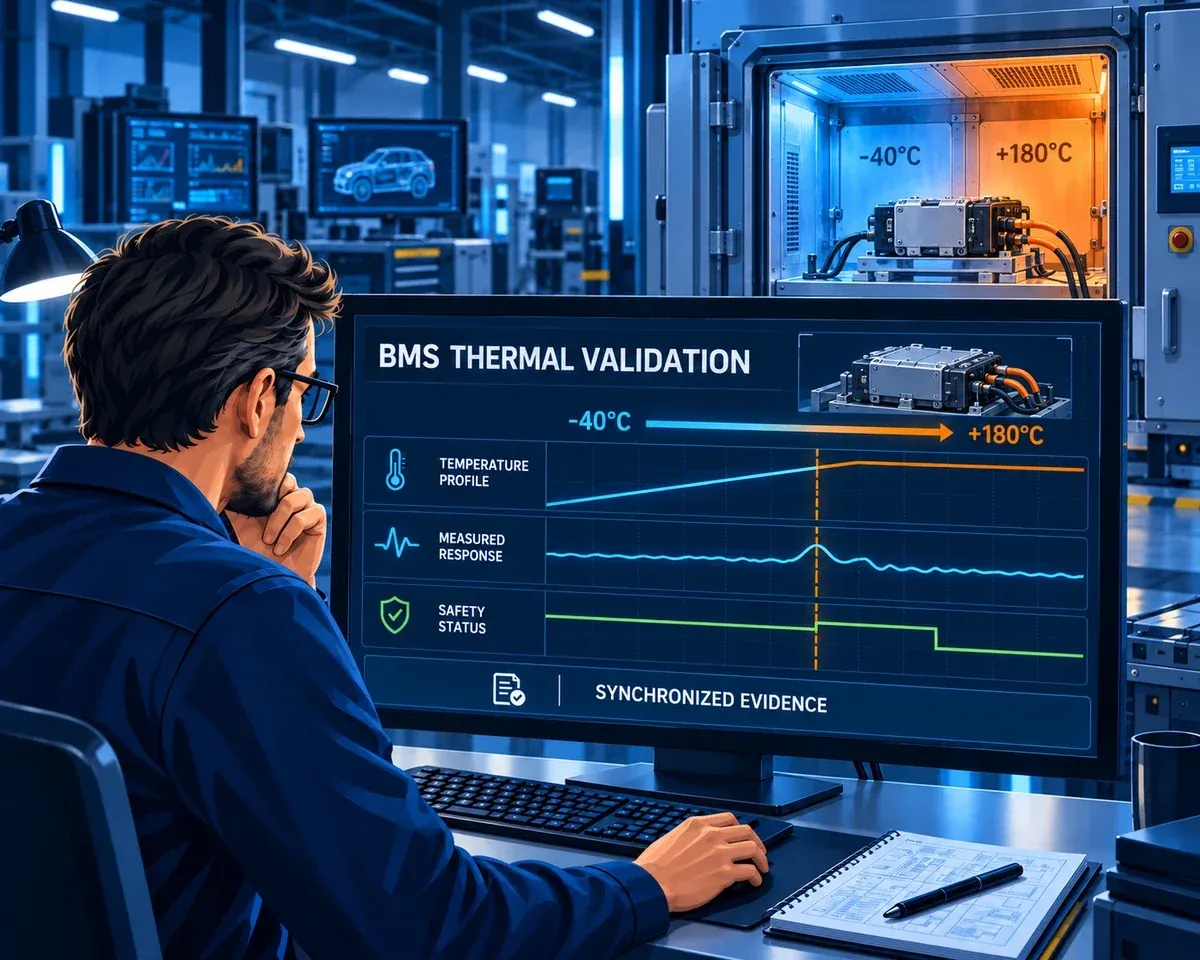
For BMS developers, validation teams and test-lab leads
Environmental testing adds practical questions to the electrical test setup. This whitepaper explores the connection between the environment around the DUT (device under test), the simulated signals and the measurements you rely on.
Structure cold-start, heat-exposure and thermal-cycling tests for the BMS (battery management system) under test.
Account for changing climate conditions when planning the test and its connections.
Understand cell-voltage and temperature-signal simulation in the environmental test setup.
Consider long cable runs and isolated simulation channels when assessing measurement quality.
The illustration depicts a test application. Its chamber temperatures are not an operating-temperature specification for the BCS hardware.
Get the whitepaper
Enter your details and review the consent statement below. We use this information to provide the requested content and to contact you about technical topics related to BMS test systems. Follow the verification email to complete your request.