
EVSE Production Testing – Easy Chester EOL
Easy Chester EOL supports repeatable end-of-line tests for manufactured charging stations. Configure AC or DC interfaces, test sequences and production integration for the product and release plan. EOL HPC addresses DC high-power production with the required source, load, switching, cooling and safety integration.
Easy Chester is designed for standalone operation without a laptop. Use the guided workflow on the device.
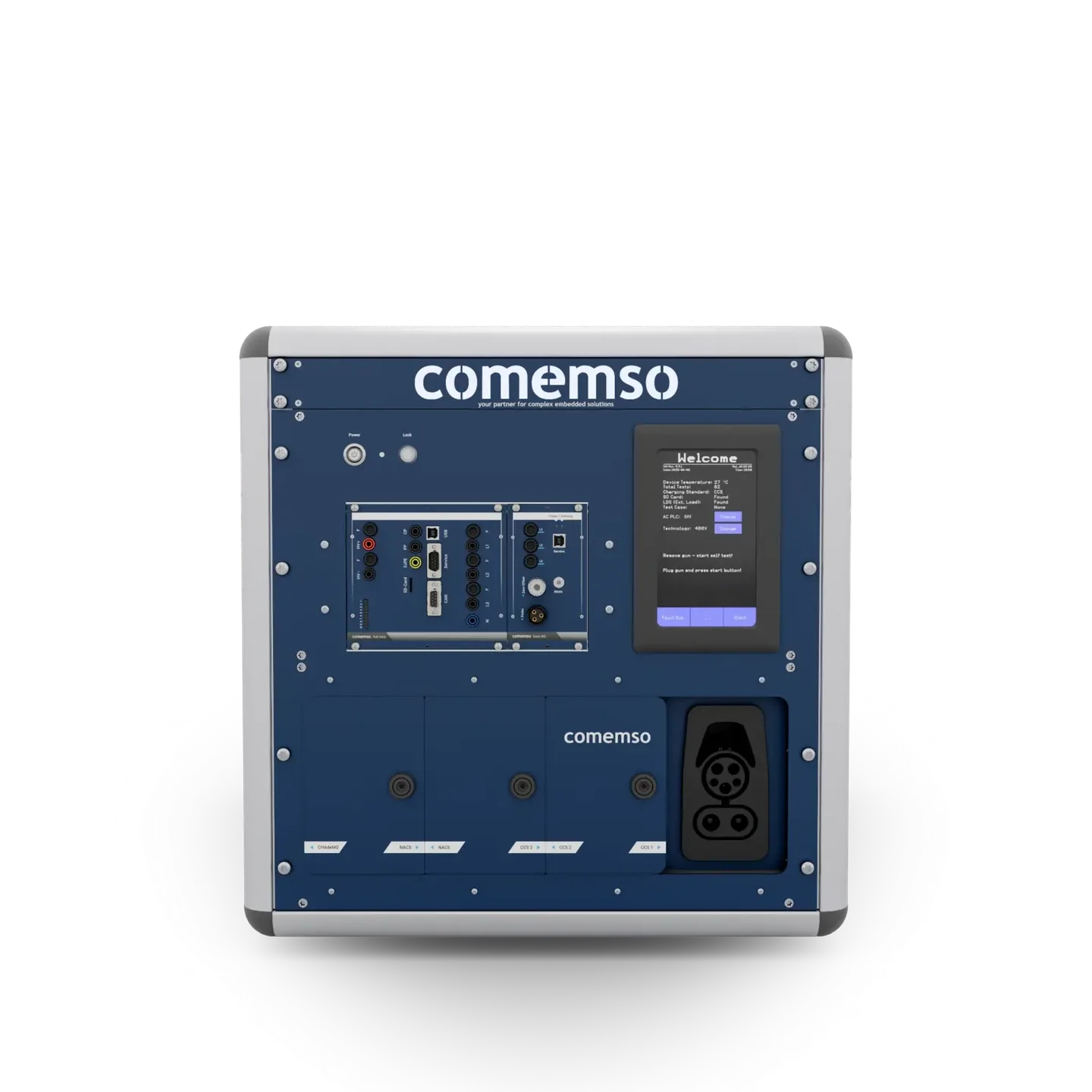
Application first
Start with the production release decision.
Easy Chester EOL provides the compact physical test boundary for production testing. Explore EVSE End-of-Line Testing to plan acceptance criteria, unit identity, automation, factory interfaces and evidence.
Validated charging requirements become a factory process.
Engineering defines the released acceptance criteria. Production identifies the unit, selects the approved profile, executes the sequence and records the decision. The charging-specific test logic remains controlled instead of being rebuilt at the line.
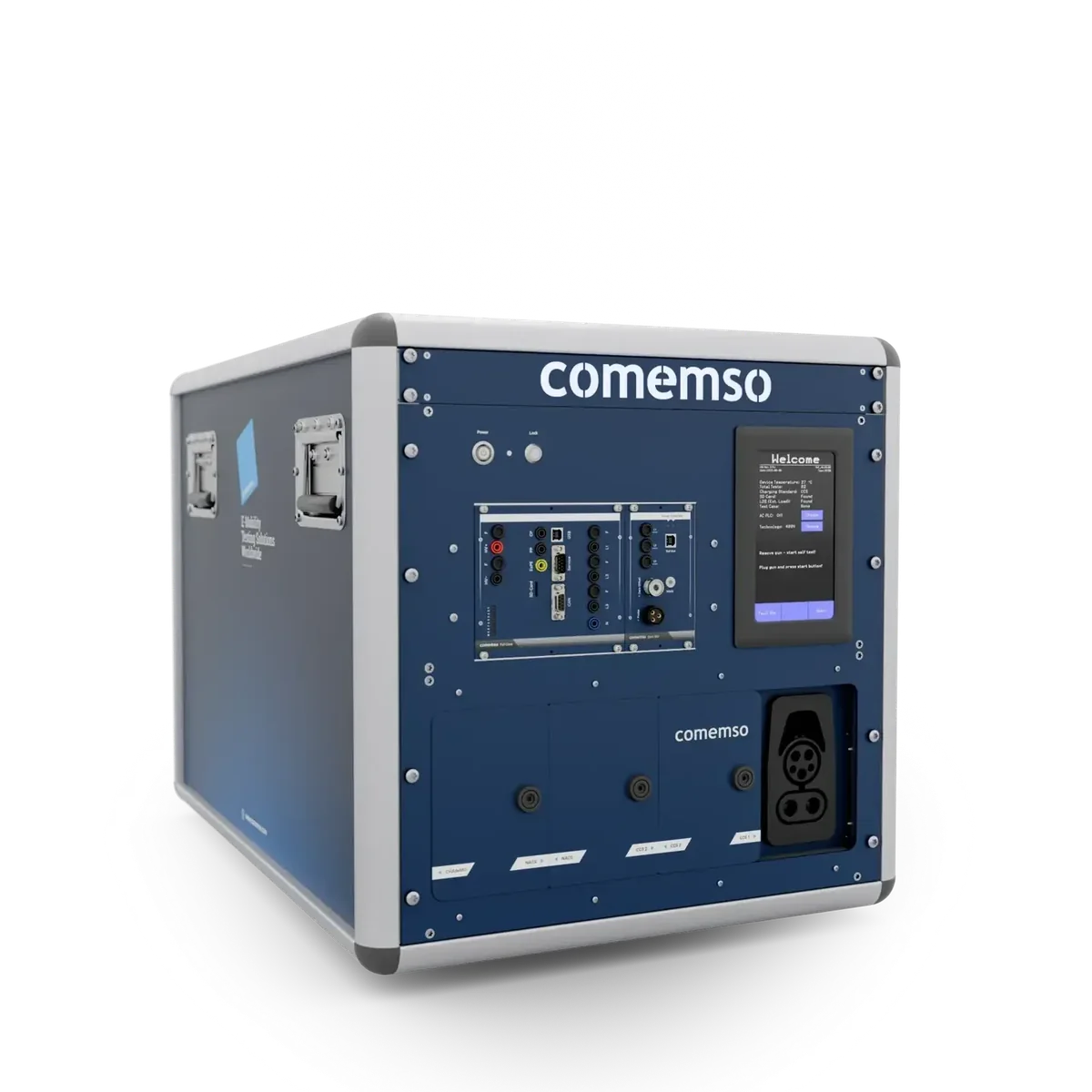
A production system, not an open-ended engineering bench.
Easy Chester EOL is designed around released product variants, controlled conditions, repeatable execution and attributable pass/fail evidence. It gives the line a stable charging-station production test while engineering retains authority over the approved scope.
One EOL workflow. Two power configurations.
Easy Chester EOL
Charging-interface checks, approved profiles and traceable production results.
Specify the DUT, acceptance criteria and required interfaces.
Explore the common production cycleEasy Chester EOL HPC
The same EOL workflow for higher-power tests, with the required external power and safety equipment.
Also specify operating points, duty cycle, switching and cooling.
Explore the higher-power configurationOne approved profile. One controlled cycle. One attributable decision.
The workflow keeps unit identity, product variant, charging checks, evaluation and release evidence in one chain. That is the difference between running a measurement and operating an EVSE end-of-line test system.
- 1
Identify the unit
Read or enter the production identity, charger variant and applicable configuration.
- 2
Load the released profile
Select the test sequence and parameter set for the manufactured variant.
- 3
Establish the test boundary
Connect the charging product under the defined production conditions.
- 4
Run charging checks
Execute the released function, communication and parameter verification.
- 5
Evaluate automatically
Apply the approved result logic to every step and preserve deviations.
- 6
Release, reject or route
Store the verdict and evidence against the unit for release, rework or review.
Production runs the test. Engineering governs the agreed test requirements.
The line should not require an engineer to reconstruct a charging environment for every unit. Approved profiles, guided steps and automatic evaluation make the process repeatable across operators, shifts and product variants.
A verdict is useful only when it belongs to the charger that was tested.
Easy Chester EOL keeps the production identity, agreed test requirements, measured evidence and final result connected. Exact fields, report content and data interfaces are defined for the project.
Unit identity
Serial number, product variant, firmware, order or other approved identification fields.
Test contract
Released profile, configuration revision, test sequence and applicable software context.
Measured evidence
Step results, relevant values, events and deviations from the acceptance criteria.
Production output
Overall verdict, report and project-specific handover to database, MES or quality process.
Fit charging-specific test logic into the line, not beside it.
Easy Chester EOL becomes the controlled charging-test layer between product identification, the physical EVSE and the production result. Identity, line-control, database and MES or QMS interfaces remain project-specific.
Easy Chester EOL HPC: the EOL workflow at higher power.
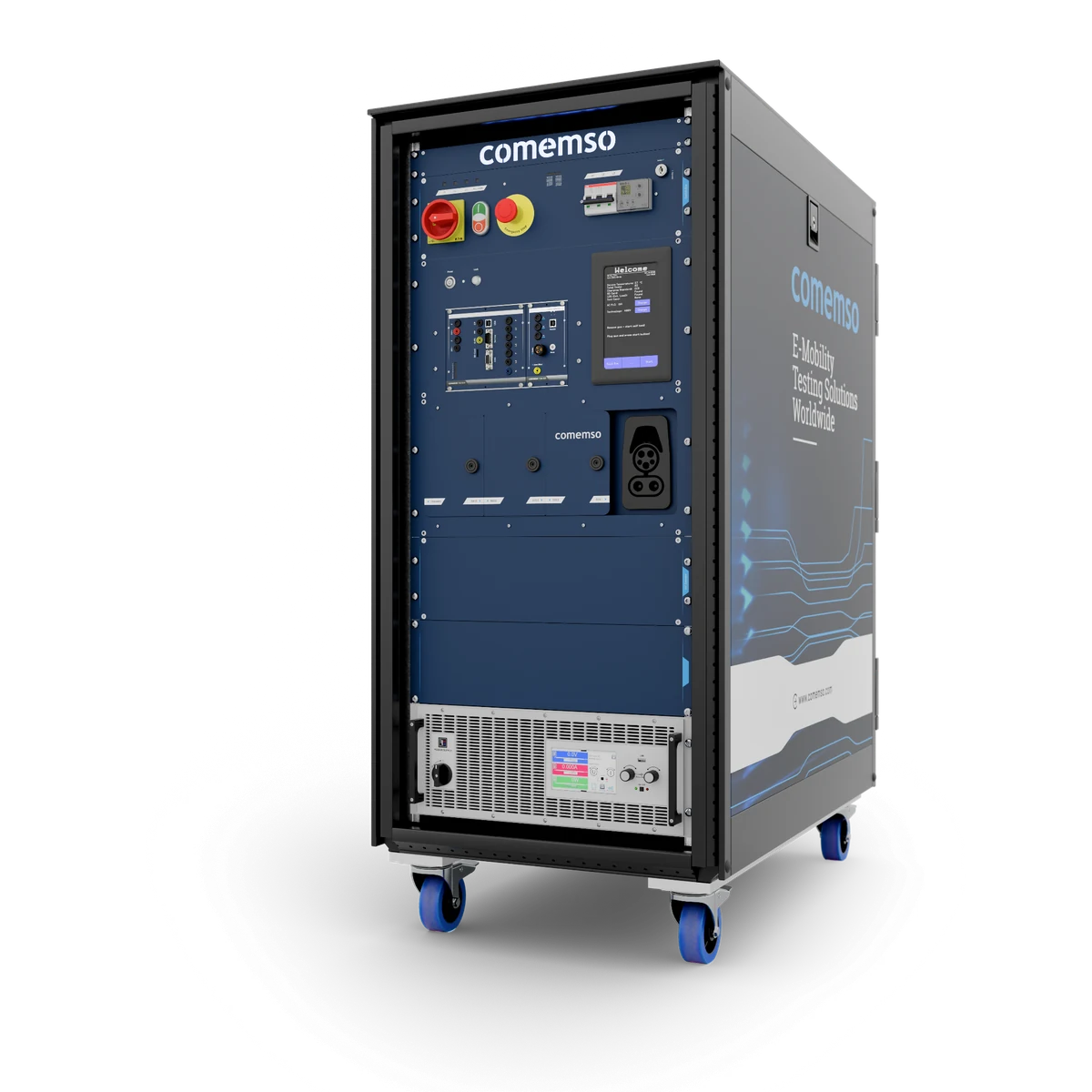
EOL HPC extends Easy Chester EOL to higher-power production tests. Both variants use approved charging test profiles, evaluation and traceable results. The HPC configuration adds the source, load, switching, protection and cooling equipment required by the charger and its production cycle.
Charging interface
Exercise the released connector, low-level states, communication and product parameters.
Safety controller
Coordinate the prerequisites, interlocks, controlled enable, shutdown and safe-state path.
Power hardware
Integrate source, load or bidirectional equipment for the defined operating points and duty cycle.
Production integration
Connect unit identity, sequence control, verdicts and reports to the production line through the released RS-232 interface and SCPI commands; higher-level factory interfaces remain project-specific.

From production order to release, rework or diagnostic routing.
The workflow preserves the relationship between the physical unit, safety state, selected configuration, applied operating points, measured evidence and final verdict.
- 1
Identify the product
Load the charger identity, variant, firmware and production configuration.
- 2
Secure the test cell
Confirm the approved prerequisites, interlocks, switching state and cooling readiness.
- 3
Verify the charging interface
Run the released low-level, communication and parameter checks.
- 4
Apply defined operating points
Coordinate the project-specific source or load hardware and duty profile.
- 5
Evaluate every layer
Apply approved verdict logic to safety, charging behaviour, power evidence and test steps.
- 6
Release, rework or route
Store the attributable result and hand it to the configured factory process.
Size the test cell from the actual charger and production cycle.
The configuration begins with independent electrical, thermal, timing and facility requirements. Hardware is selected after the device-under-test boundary and release decision are clear.
Easy Chester EOL + Calibration keeps metrology evidence in the production record.
When the factory also needs reference comparison before shipment, Easy Chester EOL can be combined with the Calimera GUI and a project-specific AC or DC power meter. Functional release and metrology-oriented verification remain connected to the same product identity.
For EOL HPC, coordinate reference measurement with the defined high-power operating points. Measurement range, uncertainty, traceability and the released calibration procedure must be specified for the production cell.
- Reference comparison at defined production operating points
- Functional and metrology evidence linked to the same unit
- Meter, range, uncertainty, traceability and procedure configured for the project
Optional metrology package at end of line
Keep production testing and metrology evidence in one manufacturing workflow
Easy Chester EOL
- production identity
- function + communication
- parameters + traceability
Calimera GUI
- metrology-oriented workflow
- CALIBRATION
- verification
AC / DC Power Meter
- project-specific meter
- energy / power reference
- traceable result
End-of-line calibration / legal-metrology-related verification
Define the product, acceptance plan and evidence before selecting interfaces.
A useful specification describes the actual manufacturing decision. Hardware, software and integration then follow that production boundary.
Charging product and variants
Complete EVSE or defined module, connector families, technologies, firmware and market versions.
Acceptance criteria
Released function, communication, parameter and pass/fail requirements.
Production integration
Identification, line controller, operator flow, result handling and approved system interfaces.
Traceability and reporting
Identity fields, configuration revisions, measurements, verdicts, reports and retention path.
Cycle and release process
Sequence duration, repetitions, rework route, throughput and maintenance of released profiles.
Optional metrology
Calimera GUI, AC/DC power meter, range, uncertainty, procedure and target market.
Easy Chester EOL and EOL HPC questions
What is Easy Chester EOL?
Easy Chester EOL is the production-focused Easy Chester system for repeatable EVSE end-of-line testing. It executes approved function, charging communication and parameter checks, evaluates the result and connects the evidence to the tested product identity.
What does an EVSE end-of-line test verify?
It verifies the completed charging product or a defined production module against released factory acceptance criteria before release. The exact checks depend on the charger family, configured interfaces and test plan.
Can one system handle different charger variants?
Product and test configurations can be stored for different variants. The production identity or operator workflow selects the approved profile so the correct test logic is applied consistently.
How is the result linked to the manufactured unit?
The project can associate the test with approved identity fields such as serial number, variant, firmware, production order and timestamp. The exact database, MES, report and retention interfaces are project-specific.
Can Easy Chester EOL be integrated with line control or MES?
The production interface uses RS-232 with SCPI commands for straightforward line integration. Product identification, sequence control, result handling and any higher-level MES or factory interfaces are defined in the project scope.
What is the difference between Easy Chester EOL and EOL HPC?
Easy Chester EOL is the compact production path for repeatable EVSE function, communication and parameter verification. EOL HPC adds the project-specific source, load, cooling, switching, safety and high-power test-cell integration required by DC fast-charging products.
What is Easy Chester EOL HPC?
Easy Chester EOL HPC is the Easy Chester production system for repeatable end-of-line verification of DC fast-charging and high-power EVSE products. It coordinates charging-interface tests, safety-relevant production checks, external power hardware, automation and traceable results.
What can be the device under test?
The DUT can be the complete charger or a defined production module such as the charging outlet, communication controller, power stage or metering path. The exact boundary must be defined for the project.
Does Easy Chester EOL HPC have one universal voltage, current or power rating?
No universal combined rating should be inferred. Voltage, current, continuous and peak power, duration, energy, cooling and facility requirements are defined independently. Compatible hardware is selected through the approved project configuration.
Can the system test the charger at defined power operating points?
Yes, when the configured production cell includes the required source, load or bidirectional power hardware. The test sequence can establish approved operating points, verify the charger response and preserve the measurements and verdicts.
How does the system support safe high-power operation?
The production cell is configured around approved prerequisites, interlocks, switching, cooling readiness, controlled enable, emergency stop, shutdown and safe-state behaviour. Exact responsibilities and safety functions are project-specific.
Production test planning
Turn approved criteria into a repeatable line workflow.
Define unit identity, variants, cycle time, interfaces and release evidence.