
Sustainability
Environmental responsibility. Measured, managed and improved.
At comemso, environmental responsibility is connected to an ISO 14001 management system, operational measures and published data. Renewable electricity, on-site solar generation, efficient buildings, fleet electrification and resource control are treated as an ongoing engineering task.
Our approach
Sustainability is a controlled improvement process.
The goal is not to isolate one attractive measure. Energy, mobility, buildings, materials, waste, people and legal obligations must be managed together and reviewed over time.
Generate and procure renewable energy
Use electricity from the company’s own PV systems first and supplement it with certified renewable electricity.
Reduce operational demand
Improve heating control, insulation, lighting, equipment selection and monitoring of major electrical consumers.
Electrify mobility
Operate a predominantly electric vehicle fleet and use AC and DC charging infrastructure in daily work and product development.
Measure and disclose progress
Track energy, water, materials, waste and emissions, then publish the results and the next improvement priorities.
Published environmental data
Progress becomes credible when the baseline stays visible.
The Environmental Report 2025 publishes comparable operational figures for 2021 through 2025. The values below show the reported start and current endpoints.
External electricity
Gas
Water
Reported operational CO₂
These figures are taken from the published report and describe reported company operations. Production volume, material use and high-power test demand changed during the period. They are not a product life-cycle assessment.
Energy and buildings
Produce more on site. Reduce the demand behind it.
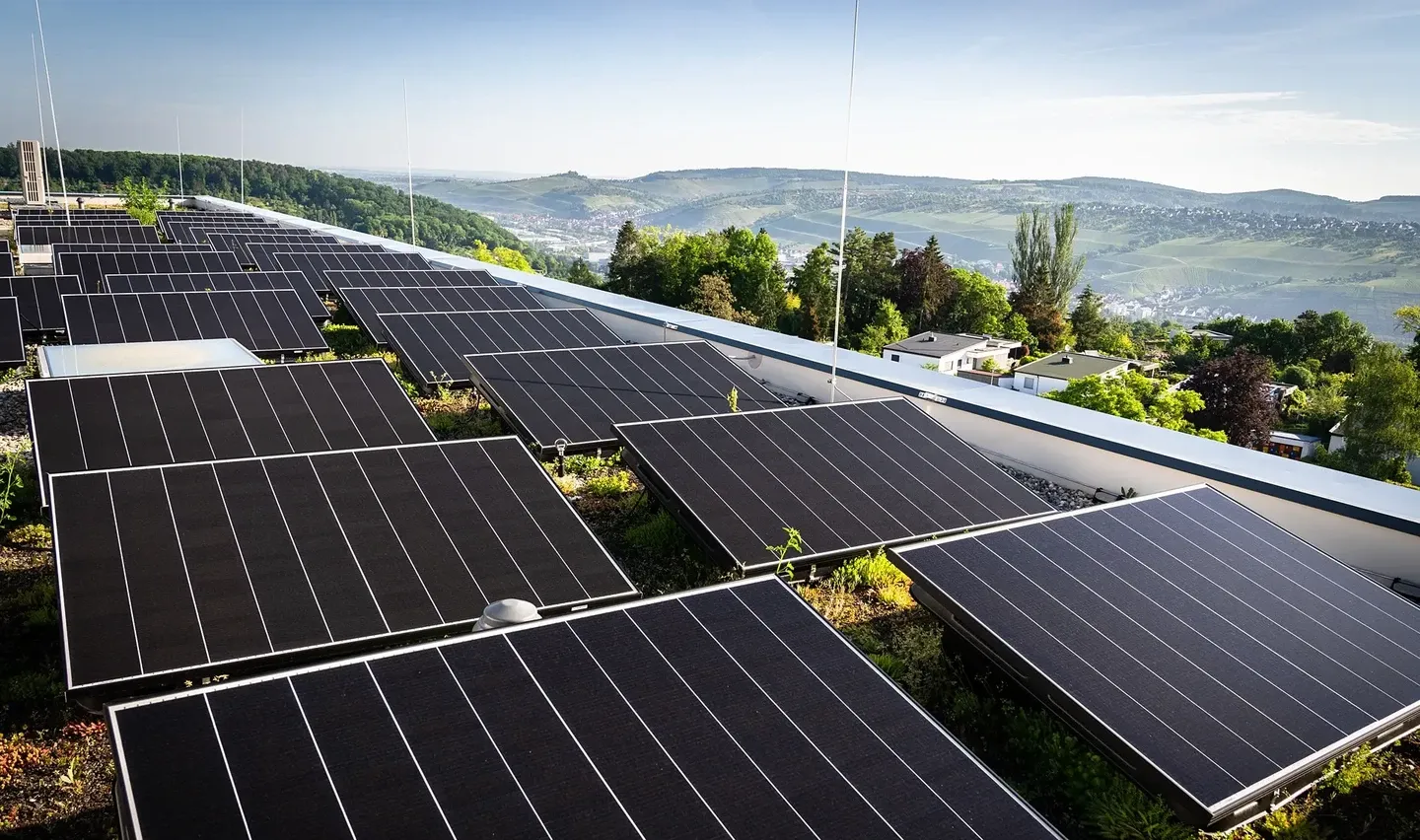
PV systems on both company buildings were installed and commissioned in 2022 and 2023. Storage capacity and additional façade-mounted PV modules were expanded through 2026 to increase self-consumption and improve winter generation.
The remaining electricity demand is covered with certified renewable electricity. The newer building uses heat pumps. In the existing building, heating controls, thermal separation and high-insulation windows reduce gas demand.
Solar generation
Roof and façade systems across the existing and new buildings.
Renewable purchased electricity
Certified renewable electricity supplements on-site generation.
Efficient building systems
Heat pumps, improved controls, insulation and monitored consumers.
Higher self-consumption
Storage expansion supports more effective use of incoming solar energy.
Operations
Environmental impact is managed beyond electricity.
The report connects energy decisions with mobility, production materials, waste, water, hazardous substances and purchasing.
Predominantly electric fleet
The report lists a fleet dominated by electric vehicles, with two diesel vehicles remaining in 2025. AC and DC charging stations support both operations and product testing.
Materials and recycling
Material input and waste remain measurable. Suppliers are addressed on take-back and recycling of sorted production plastics where feasible.
Water and substances
Water use, cleaning agents, solvents and other relevant substances are tracked. Substitution opportunities for hazardous substances are reviewed regularly.
The report also explains why 2025 operational CO₂ remained close to 2024, including the use of a specialised field-calibration transporter. Progress is documented without hiding the operational trade-offs behind it.
Environmental management
Responsibilities turn intentions into repeatable action.
comemso’s environmental management includes a permanent environmental officer, employee training, internal participation, recurring audits and documented legal-compliance checks.
Defined responsibility
An environmental officer reviews processes independently of day-to-day production responsibility.
Employee participation
Training, information and an internal suggestion system support continual improvement.
Audits and compliance
Internal and external audits, safety structures and legal-conformity checks keep obligations visible.
Measurable objectives
Future priorities include reducing external electricity demand, increasing solar self-consumption and keeping emissions growth below company growth.
Environmental Report 2025
Read the data, measures and remaining priorities in one document.
The German-language report documents the environmental strategy, measures from 2015 through 2025, operating data for 2021 through 2025, management responsibilities, objectives, occupational safety context and legal compliance.
2025Operational data · measures · objectives · management
- Energy, PV generation, gas and vehicle fuels
- Materials, water, waste and operational emissions
- Building, mobility and production measures
- Environmental management and future objectives
Continue from technical context
Turn the information into the next engineering decision.
Continue to the relevant application, current product scope or responsible comemso team.