
Standards & Knowledge / EVSE field inspection
Inspect charging stations with a repeatable field workflow.
Visual condition. Electrical safety. Functional charging. Evidence.
The compact Quick Guide for Inspecting Charging Stations structures commissioning, maintenance, repair and recurring inspection from the first visual check to the documented result. It helps teams avoid omissions without replacing applicable laws, standards, manufacturer instructions or qualified judgement.
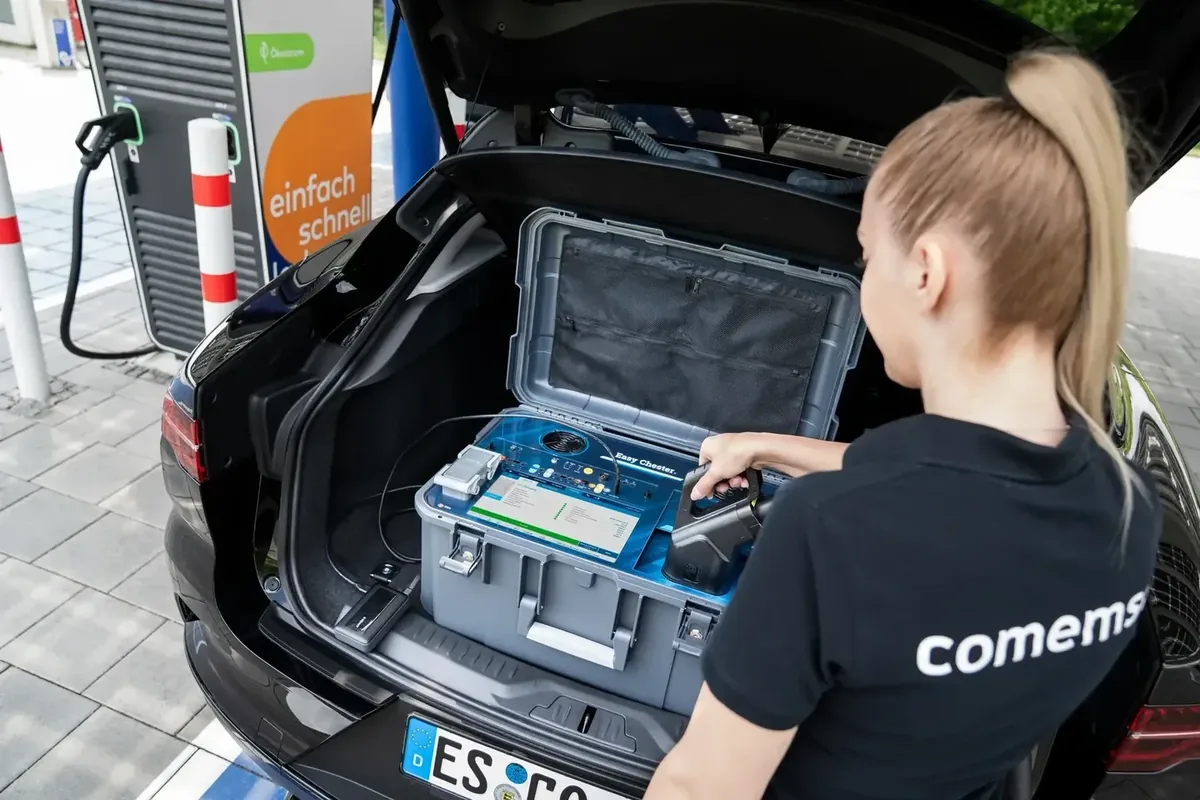
Choose equipment for your inspection
Use Easy Chester Micro for AC installation and inspection tasks. If your work also includes DC charging tests, review Easy Chester Ultimate. Check the supported safety functions, interfaces and options against your inspection scope.
Compare Micro and UltimatePurpose of the guide
Turn a field visit into a complete inspection decision.
A charging station can appear operational while still containing installation, protective-device, connector, communication or documentation issues. The guide provides a practical order for checking the station rather than relying on memory or an isolated charging attempt.
It combines the published inspection topics into one compact route: visual condition, electrical system, repeated measurements and tests, calibration validity where applicable, functional charging and evidence.

Free quick guide and checklist
Take a repeatable EVSE inspection workflow into the field.
For service technicians, charge point operators and EVSE (electric vehicle supply equipment, or charging station) test teams working on commissioning, maintenance and repair. Use the guide to structure visual inspection, electrical checks, repeated measurements and charging-function tests.
Complete the form and confirm your email address. The requested guide is delivered by email after verification.
Four-stage inspection sequence
Move from condition to evidence without skipping the interfaces in between.
The sequence keeps preparation, visual findings, electrical measurements and charging behaviour in one accountable workflow. The exact test depth remains installation- and market-specific.
Prepare and identify
Record the station, connector, location, responsible operator, prior findings, intended inspection type and required safety measures.
Inspect visually
Check housing, mounting, cable, plug or socket, contamination, damage, accessibility, labels and visible installation condition.
Measure electrical safety
Verify the electrical system and repeat the required measurements and tests using the applicable standard, edition and national implementation.
Test function and document
Run the charging sequence, selected failure cases and status checks, then preserve measurements, deviations and corrective actions.
What the guide covers
A compact checklist across the physical, electrical and functional layers.
The published guide groups the inspection into visible condition, the electrical installation, repeated measurements, calibration status and charging-function checks.
- Visual inspectionPhysical condition of station, cables, plugs or sockets, markings and accessible components.
- Electrical systemInstallation and protective measures relevant to safe operation.
- Repeated measurementsMeasurements and tests in the applicable electrical-safety context, including IEC 60364-6 references.
- Calibration validityStatus checks where legal metrology or market-specific calibration requirements apply.
- Functional chargingNormal charging behaviour, selected failure simulations and reportable results.

Who the guide is for
One inspection structure for the teams responsible for charger condition.
Service technicians
Prepare maintenance and repair visits, record findings consistently and reduce repeat visits caused by missing context.
Charge point operators
Define a repeatable route for operational checks, contractor handover and follow-up actions across the charging network.
EVSE test engineers
Connect installation condition, electrical measurements and charging behaviour when evaluating field systems.
Compliance and quality teams
Use a consistent inspection structure while retaining the applicable normative, regulatory and organisational boundary.
Ready to inspect your charging stations?
Frequently asked questions
EVSE inspection guide questions
What does the EVSE Inspection Guide cover?
It structures visual inspection, inspection of the electrical system, repeated measurements and tests, calibration validity where applicable, functional charging checks and documentation. It is a practical guide, not an exhaustive legal or normative assessment.
Who is the guide intended for?
The guide is intended for service technicians, charge point operators, EVSE test engineers and compliance or quality professionals involved in commissioning, maintenance, repair or recurring inspection.
Does the guide replace applicable standards or legal requirements?
No. The guide provides practical orientation and does not replace applicable laws, standards, manufacturer instructions, operator procedures or qualified professional judgement.
Which standards context is included?
The published guide includes normative references for charging-station inspection and repeated electrical measurements, including IEC 60364-6. The applicable edition, national implementation and project requirements must still be confirmed.
Continue from technical context
Turn the information into the next engineering decision.
Continue to the relevant application, current product scope or responsible comemso team.