
Products / EVCA Platform / Multi Mobile
EVCA Multi Mobile: Portable EV and EVSE Test System
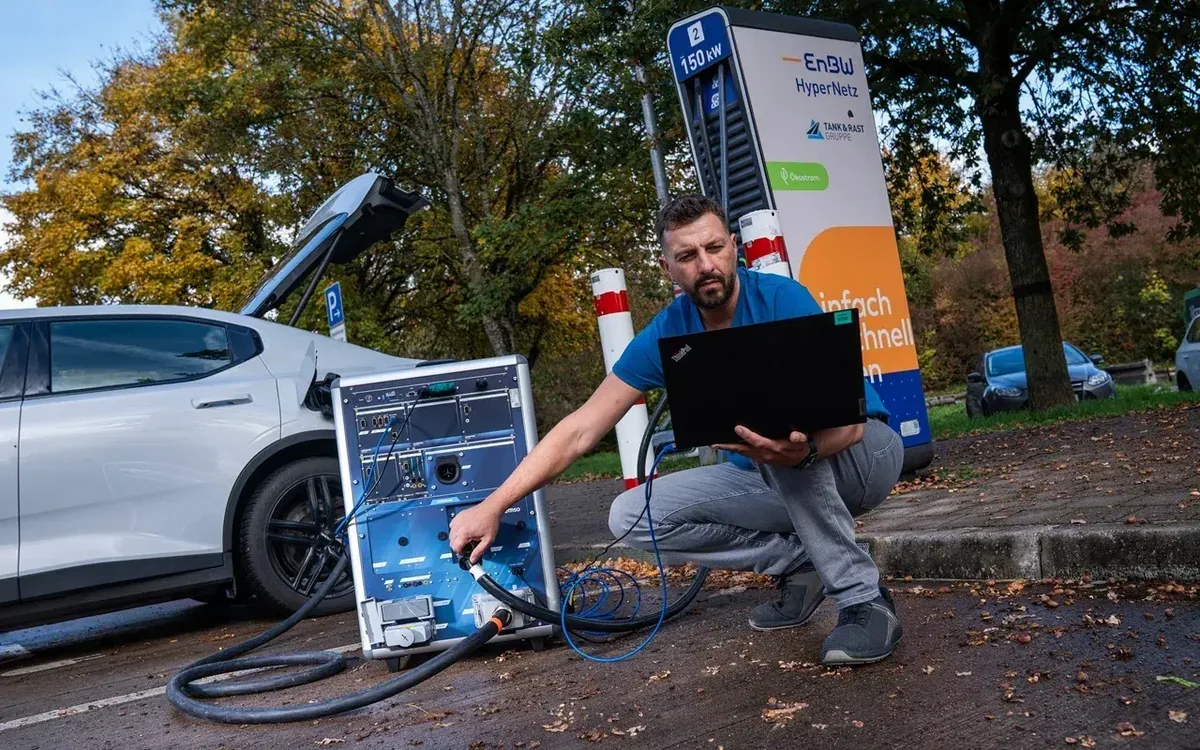
Take a charging measurement from the laboratory to the vehicle or field installation. Use Multi Mobile to observe a real charging pair or configure a simulated partner with the necessary external power equipment.
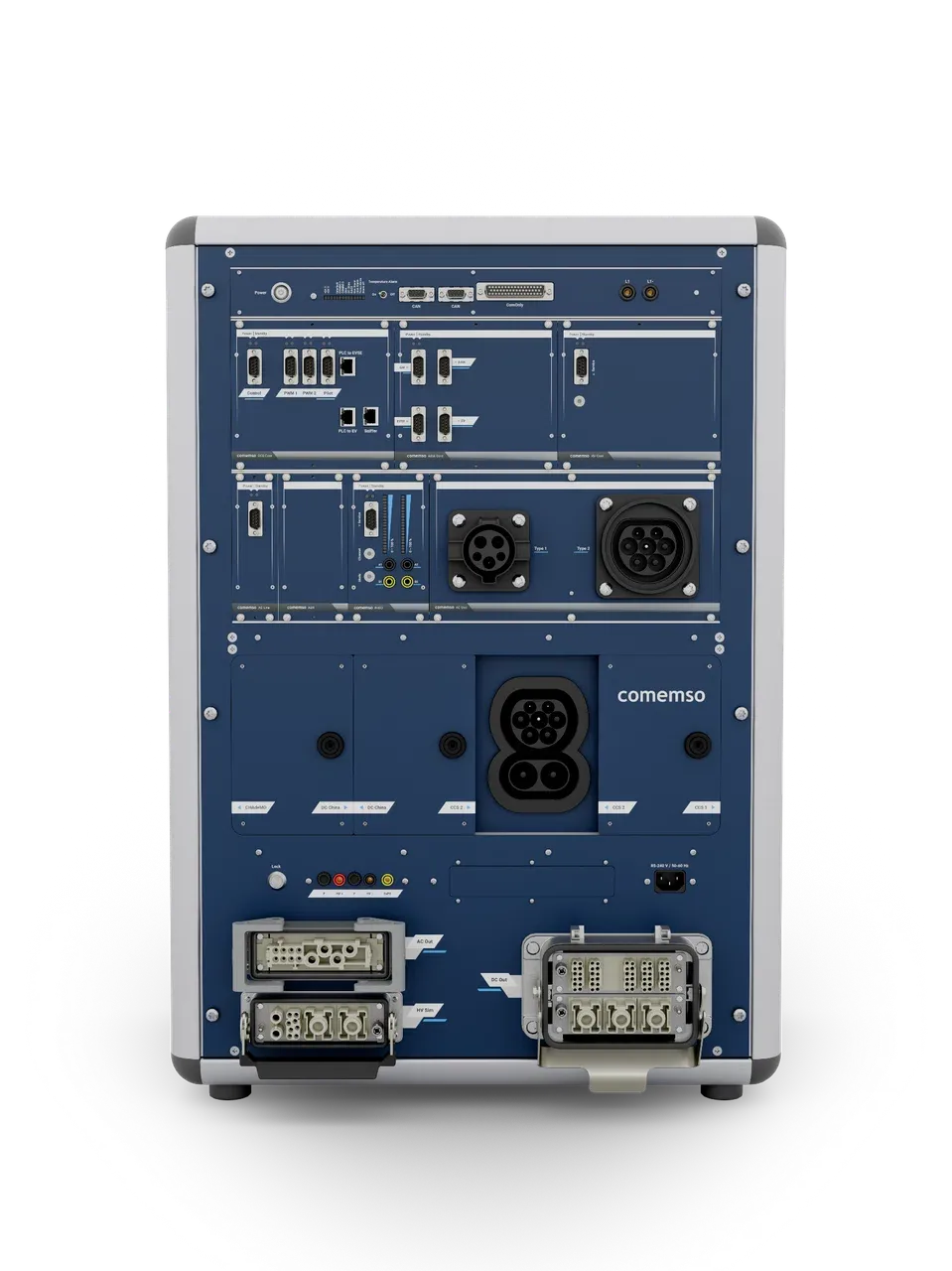
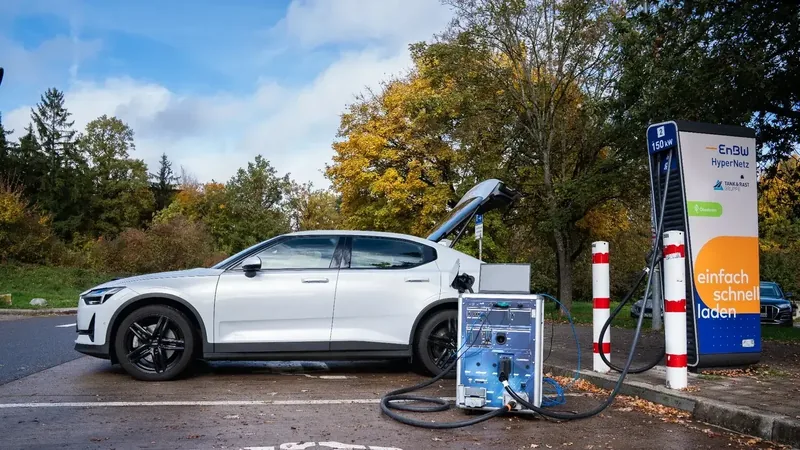
One device from a field finding to laboratory EV simulation.
An EVSE (electric vehicle supply equipment, or charging station) manufacturer purchased Multi Mobile with a 3 kW laboratory source/load after a precharge investigation. About three minutes of human analysis followed the recording; setup, software work and retest took additional time.
Portable engineering system
The critical charging behaviour is not always waiting in the laboratory.
Vehicles, prototypes, charging stations and interoperability partners are often available only at a site, workshop, proving ground or test event. Moving every DUT (device under test) into a fixed laboratory delays diagnosis and can remove the exact condition that triggered the failure.
EVCA Multi Mobile carries the physical charging interface and the shared EVCA test intelligence to the point of interaction. The same platform can simulate one charging partner, observe both real partners and return to the laboratory for controlled reproduction and regression.
Multi Mobile is a portable development, analysis and validation platform. It is not positioned as a generic service checker and it does not replace EVCA Flex where integrated high-power, switching and deep electrical fault injection dominate the test objective.
One system. Three boundaries.
Simulate either charging partner or analyse the real pair between them.
The DUT defines the role. Multi Mobile places the portable EVCA hardware and comframe software at the charging boundary that must be controlled, observed or challenged.
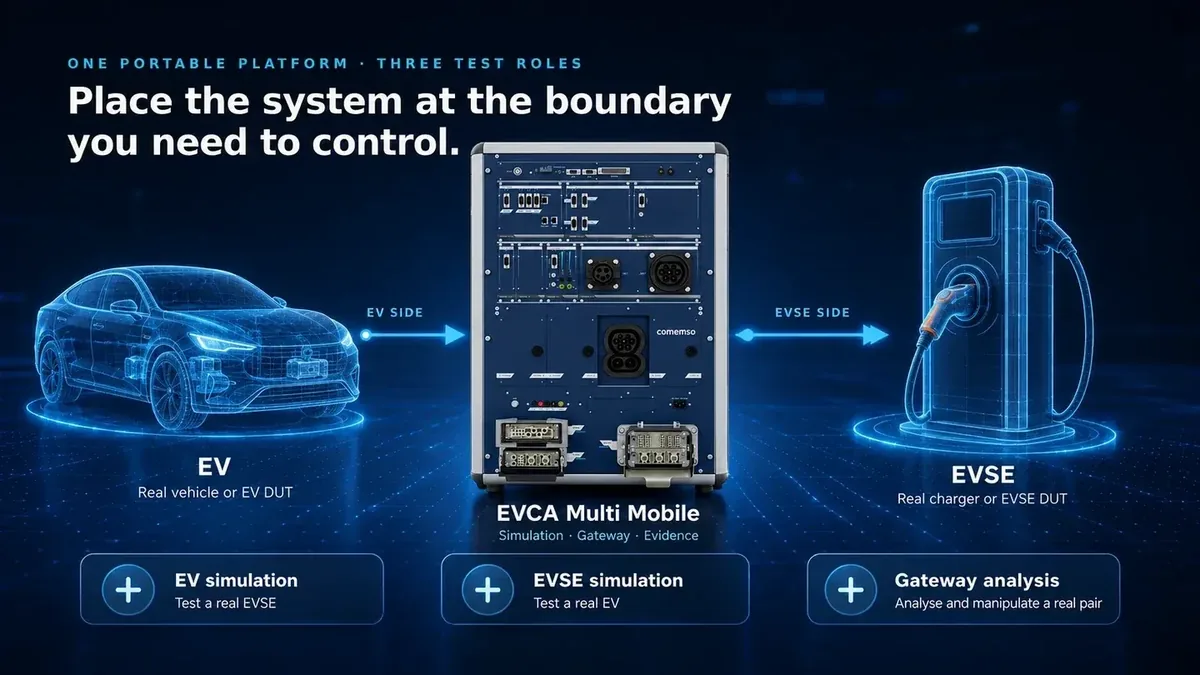
EV simulation
Test the charging station.
Multi Mobile behaves as the electric vehicle and provides controlled vehicle, battery-request and communication behaviour to a real EVSE.
- Configure normal, boundary and non-conform EV behaviour.
- Measure Control Pilot (CP), HLC, timing and configured voltage/current values.
- Connect project-specific load or bidirectional power hardware where energy transfer is required.
- Execute reusable simulations, automation and supported EVSE Test Libraries.
EVSE simulation
Test the electric vehicle.
Multi Mobile behaves as the charging station and challenges the real charging inlet, EVCC (vehicle-side charging communication controller), onboard charger and vehicle charging logic.
- Provide configurable SECC, signal and protocol behaviour.
- Vary messages, timing, limits, authorisation and termination.
- Connect project-specific source hardware when the vehicle must receive power.
- Correlate vehicle-side CAN data and EVCC, OBC and BMS reactions where integrated.
Passive or manipulating gateway
Analyse the real EV and EVSE.
Place the system between both charging partners and correlate what each side transmits, measures and does on one synchronised timeline.
- Observe the real pair without replacing either implementation.
- Decode supported CCS communication, including applicable gateway access for TLS/PnC.
- Modify, delay, suppress or replace selected live information where configured.
- Record field behaviour for root-cause verification and later reproduction.
Charging-specific analysis
Showing decoded data is not the same as analysing the charging process.
A charging interruption rarely explains itself in one trace. Multi Mobile keeps the physical interface, low-level signals, protocol content, timing and available electrical measurements in one technical context.
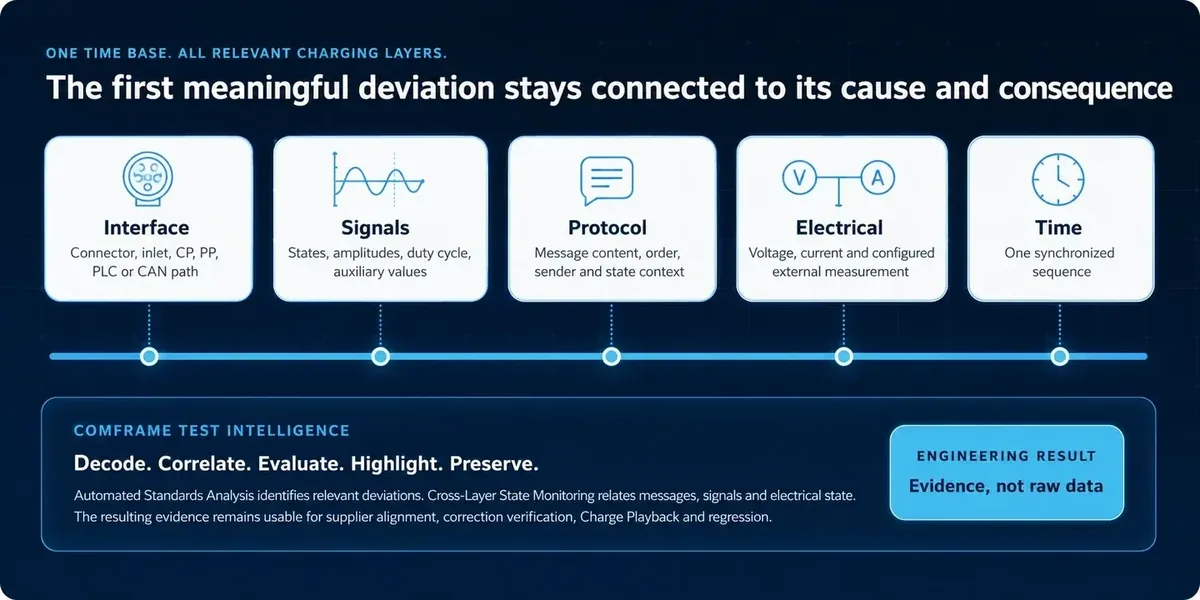
Physical interface
Regional connector, inlet, CP, Proximity Pilot (PP), PLC (power line communication) or CAN path and auxiliary signals remain part of the measurement.
Protocol behaviour
Retain sender, message content, order, state and configured TLS or certificate context.
Timing
Place message delays and state transitions beside the physical reaction instead of reviewing separate clocks.
Electrical response
Correlate configured voltage, current and external measurement channels with the communication sequence.
Standards-aware evaluation
Let comframe compare behaviour with expected limits, highlight relevant deviations and preserve the result as evidence.
Field-to-laboratory continuity
Turn one difficult charging event into a controlled, repeatable test.
Capture the real interaction where it happens. Isolate the first meaningful deviation. Validate the hypothesis. Reproduce supported charging-partner behaviour at the physical interface. Keep the case for regression.

From a real charging event to reusable test evidence
Connect and capture
Record protocol, signals, timing and electrical values at the real charging interface.
Isolate the cause
Align every layer and let standards-aware analysis highlight the deviation.
Change one variable
Modify message content or timing with the Manipulating Gateway or simulation.
Reproduce physically
Use Charge Playback to recreate recorded behaviour at the charging interface.
Automate regression
Save the case, vary it and run it repeatedly through Charge Cycle Automation or REST API.
Field evidence becomes a controlled, repeatable lab test
Shared EVCA test intelligence
Configure the test. Do not develop the test environment from scratch.
Multi Mobile combines a portable EVCA system with comframe-based analysis, simulation and automation capabilities. Explore each capability for its method and released scope.
Automated Standards Analysis
Relate measurements, state transitions, timing and messages to normative expectations and highlight deviations.
Professional Simulation
Configure supported message values, timing, optional sequences and deliberately non-conform behaviour.
Manipulating Gateway
Observe and change selected live communication while both real charging partners remain connected.
Charge Playback
Physically reproduce recorded protocol-level EV or EVSE behaviour so the DUT interacts with a repeatable partner.
Charge Cycle Automation
Sequence configurations and variants for repeatable campaigns, endurance work and regression.
Conformance Test Libraries
Execute released standards-based test cases with automated steps, supported verdicts and reports.
REST API and integration
Connect Multi Mobile to project automation, external measurement, HIL (hardware-in-the-loop) and CI workflows.
Configuration rule. Not every capability is available for every charging interface, protocol release or test role. The quotation must identify hardware, connectors, software licences, Test Libraries and current release scope explicitly.
Charging technologies and standards
Take one portable EVCA architecture across the charging families your programme must support.
The exact connector set, protocol version, measurement range and Test Library release remain configuration-dependent. Multi Mobile is selected around the project portfolio rather than a single fixed protocol.
PLC-based charging
Configure Type 1, Type 2, Combo or NACS interfaces for EV, EVSE and gateway roles.
CAN-based DC charging
Use configured CHAdeMO connector, CAN communication and low-level state access in EV, EVSE or measurement roles.
Chinese DC charging
Address EV and EVSE communication for supported GB/T generations without changing to a separate analysis architecture.
Charging communication under stress
An optional EMC-compatible housing supports configured EV or EVSE test roles while the DUT is exposed to conducted or radiated stress.
For example, ISO 15118-20 communication, Plug and Charge or TLS gateway access, certificate handling and a specific conformance Test Library are distinct configuration and release decisions. Product-family availability does not mean that every Multi Mobile system includes every function.
Configuration logic
Specify the system around the DUT, interface and engineering decision.
The product name alone is not a test specification. Define the role, charging technology, communication depth, power context, evidence and upgrade path before hardware and licences are fixed.
- 01DUT and role
EV, EVSE, both real partners, charging controller or coordinated subsystem.
- 02Charging interfaces
AC, CCS1, CCS2, NACS, CHAdeMO or GB/T DC, including connector arrangement.
- 03Communication depth
Low-level signals, PLC or CAN, HLC (high-level communication), timing, TLS, certificates and external CAN data.
- 04Power context
Measurement only, customer load, source, bidirectional supply or planned EVCA Flex link.
- 05Capabilities and evidence
Gateway, Professional Simulation, Charge Playback, Test Libraries, automation, REST API and reports.
- 06Environment and growth
Laboratory, vehicle, field, test event, EMC chamber, Interop workflow or later Flex expansion.

Frequently asked questions
EVCA Multi Mobile product questions
What is EVCA Multi Mobile?
EVCA Multi Mobile is the portable system path within the comemso EV Charging Analyzer/Simulator platform. It combines configured physical charging interfaces, EV and EVSE simulation, passive or manipulating gateway analysis and comframe test intelligence for laboratory, vehicle and field work.
Can one system test both electric vehicles and charging stations?
Yes. In EV simulation, Multi Mobile acts as the vehicle side to test a real EVSE. In EVSE simulation, it acts as the charging-station side to test a real EV. Exact interfaces, power integration and protocol releases depend on the configured system.
Can EVCA Multi Mobile analyse a real EV and a real EVSE at the same time?
Yes. In passive or manipulating gateway configurations, Multi Mobile is placed between both charging partners and correlates supported signals, protocol messages, timing and electrical measurements on one timeline. Applicable TLS access requires the corresponding gateway, certificate and release configuration.
Which charging technologies can be configured?
Published Multi Mobile configurations cover AC and DC CCS Type 1 and Type 2, NACS, CHAdeMO and GB/T DC. The quotation must state the actual connectors, protocol generations, measurement scope and Test Libraries.
Does EVCA Multi Mobile support ISO 15118-20?
ISO 15118-20 communication is available in applicable released EVCA configurations. Basic communication support, simulation depth, security functions and conformance Test Library availability are separate scopes and must be confirmed independently.
Does the system include a high-power source or load?
Not by default. Multi Mobile is optimised for portable physical-interface access, simulation and synchronised analysis. Project-specific resistive loads, sources or bidirectional power systems can be integrated. EVCA Flex is the dedicated path when scalable high-power and deep electrical fault testing are primary.
EVCA system planning
Match the EVCA path to the real test boundary.
Specify the DUT, simulated role, charging family, physical depth and software scope.
EVCA system selection and growth
Choose Multi Mobile when the DUT or charging problem moves.
Select the system by the dominant test boundary. EVCA shares software and engineering principles across the platform, but each product path owns a different physical depth.
EVCA ComOnly
EVCC and SECC (station-side charging communication controller) communication development without the broader portable charging-interface and power context.
Grow toward Multi Mobile or FlexEVCA Multi Mobile
EV simulation, EVSE simulation and gateway analysis around real vehicles, charging stations and changing locations.
Current product pathEVCA Interop
Dedicated real EV-to-real EVSE workflow for capture, synchronised analysis, validation and field-to-lab transfer.
Use when the real pair is primaryEVCA Flex
External or integrated source/load architecture, switching, high voltage and deep electrical fault testing.
Upgrade when power risk dominatesProduct boundary at a glance
Exact implementation still depends on connector, module, software and external power configuration.
On smaller screens, scroll the table horizontally to see every column.
| Selection criterion | ComOnly | Multi Mobile | Interop | Flex |
|---|---|---|---|---|
| Primary purpose | Controller communication | Portable lab, vehicle and field testing | Structured real-pair investigation | Modular high-power validation |
| Physical charging interface | Controller or integration interface | Portable regional connectors | Defined by the real-pair setup | Configurable laboratory interfaces |
| EV and EVSE simulation | Yes, communication-focused | Yes, with portable physical context | Case-dependent | Yes, scalable |
| Real EV + EVSE analysis | Interface-dependent | Strong mobile role | Primary product role | Configurable |
| Power and fault depth | Communication only | Measurement and external project hardware | Measurement and partner interaction | Low to high power and deep faults |