

EVCA Platform
EVCA: EV Charging Testers for EV and EVSE
comemso EVCA is a configurable EV charging analyzer and simulator. Depending on the selected system, it supports EV testing with a simulated charging station, EVSE testing with a simulated vehicle, or analysis of a real EV–EVSE charging session. Interfaces, power equipment and software scope follow the test task.
EV, EVSE (electric vehicle supply equipment, or charging station), EVCC (vehicle-side charging communication controller), SECC (station-side charging communication controller), real pair and MCS paths.
Communication, interface, power, faults, chamber and field.
Charging-focused configuration, analysis, automation and evidence.
Extend depth without treating every new task as a new test world.
Why it is a platform
The hardware boundary changes. The engineering logic stays connected.
EVCA is not one universal cabinet and not a loose catalogue of modules. It is a family of physical system paths built around charging-specific test intelligence, reusable workflows and measurements linked to their test conditions.
Exact modules, licences, Test Libraries and interfaces depend on the selected EVCA system and release.
Charging-specific intelligence
Protocol states, timing, low-level signals, measured values and normative expectations remain connected instead of being presented as isolated data streams.
Configurable physical boundary
Select the system that controls the relevant participant, interface, power level, fault condition, chamber boundary or real EV-to-EVSE interaction.
Reusable engineering work
Carry approved configurations, test logic, captured charging behaviour, automation and evidence into the next development step where the released system supports it.
Six system paths
Choose the EVCA by the boundary you need to control.
Cabinet size is a consequence of the test task. The primary decision is whether the DUT (device under test) needs a communication counterpart, a real charging partner, a portable interface system, a scalable laboratory power environment, an MCS path or an optical EMC boundary.
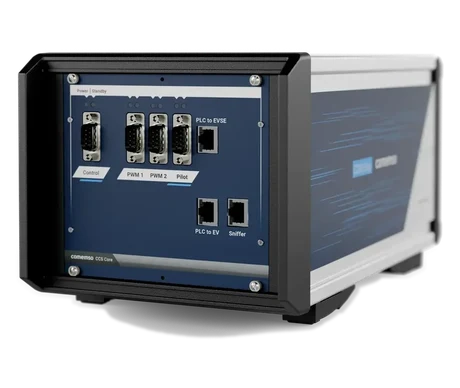
EVCA ComOnly
Start with EVCC or SECC communication development, protocol analysis, nominal and advanced simulation and applicable Conformance Test Libraries without building the complete power environment.
- Primary DUT
- EVCC or SECC
- Environment
- Bench and laboratory
- Use when
- Protocol behaviour is the test boundary
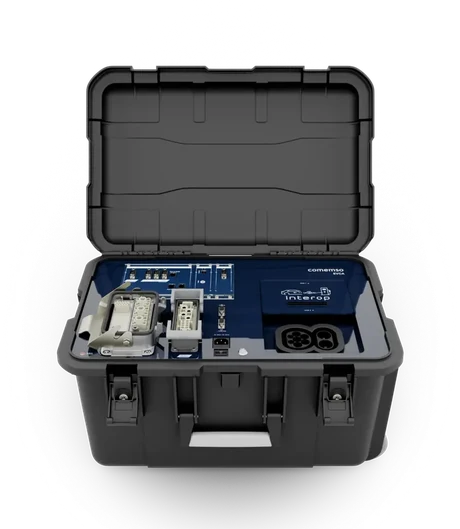
EVCA Interop
Keep the real vehicle and real charging station in the loop. Capture configured layers on one timeline, isolate the root cause and validate a suspected correction before changing either participant.
- Primary DUT
- The real charging pair
- Environment
- Field and laboratory
- Use when
- A real interaction failed or behaves inconsistently
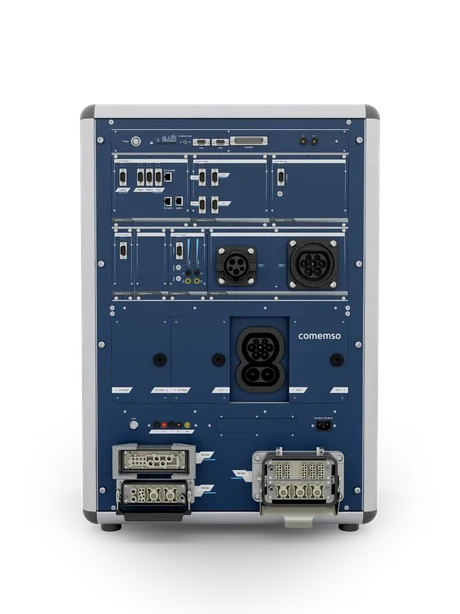
EVCA Multi Mobile
Move between EV simulation, EVSE simulation and real-pair analysis with portable multi-standard hardware for vehicle, laboratory and field work.
- Primary DUT
- EV, EVSE or real pair
- Environment
- Mobile laboratory and field
- Use when
- One portable system must cover several roles
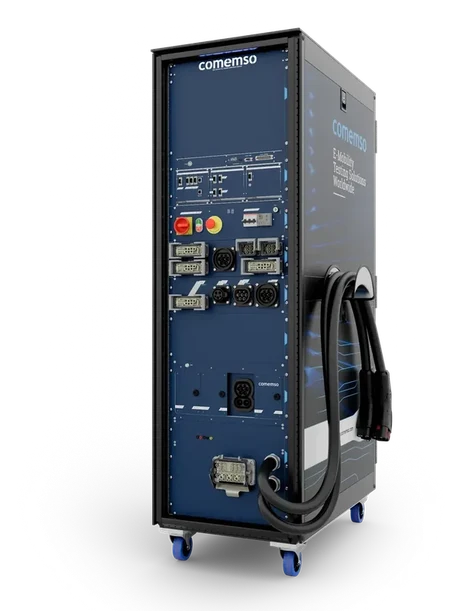
EVCA Flex
Build a modular EV or EVSE test environment around external source and load hardware, synchronised measurement, electrical faults, high-power operation and standards-specific test hardware.
- Primary DUT
- Complete EV or EVSE charging system
- Environment
- Laboratory and validation centre
- Use when
- Power, faults and deeper physical verification matter
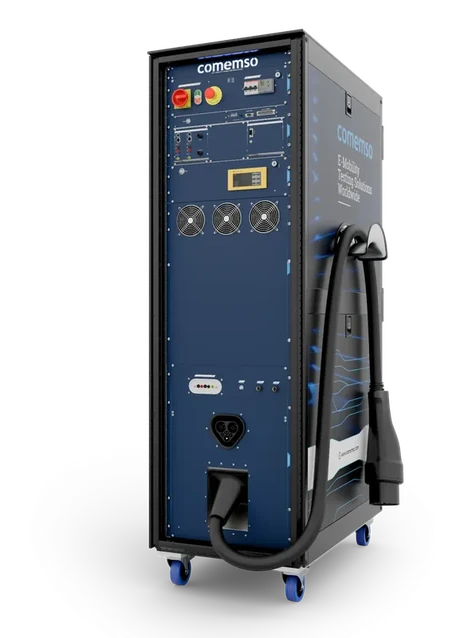
EVCA MCS
Address MCS EV, EVSE and communication testing with charging-specific protocol, low-level signals, temperature and cooling interfaces and scalable power integration.
- Primary DUT
- MCS EV, EVSE or controller
- Environment
- MCS laboratory and system test
- Use when
- The complete megawatt charging stack must be controlled
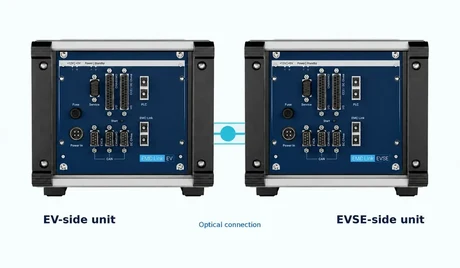
EMC Link
Preserve charging communication through the EMC chamber with a transparent optical link while the approved measurement and test systems remain outside the chamber.
- Primary DUT
- EV, EVSE or charging interface under EMC stress
- Environment
- EMC chamber
- Use when
- The chamber boundary must not distort communication
Selection matrix
Compare the primary system responsibility.
Use the matrix to identify the system path that matches the test boundary, then confirm ratings, interfaces and released scope on the detailed product page.
On smaller screens, scroll the table horizontally to see every column.
| System path | Primary test boundary | Typical environment | What this path adds |
|---|---|---|---|
| EVCA ComOnly | EVCC or SECC communication | Bench and laboratory | Charging-protocol development, simulation, analysis and applicable conformance logic without the complete power stage. |
| EVCA Interop | Real EV-to-EVSE interaction | Field and laboratory | Synchronised real-pair evidence, root-cause isolation and validation of a correction hypothesis. |
| EVCA Multi Mobile | Portable EV, EVSE and real-pair interface | Vehicle, mobile laboratory and field | Multi-role, multi-standard access where the test system must move with the engineering team. |
| EVCA Flex | Controlled EV or EVSE laboratory counterpart | Laboratory and validation centre | External power integration, synchronised electrical depth, controlled faults, high-power and standards-specific hardware. |
| EVCA MCS | MCS communication, low-level signals, cooling and power | MCS system laboratory | Dedicated EV, EVSE and controller paths for the megawatt charging stack. |
| EMC Link | Optical charging communication across the chamber wall | EMC chamber | A transparent chamber boundary for charging communication. Stimulus, measurement and verdict remain with the configured laboratory systems. |
Growth architecture
Keep the core. Expand your test system.
The EVCA core is the brain of the system. In a compatible expansion, your existing core moves into a larger EVCA body, while comframe keeps the workflow and test logic connected.
 Your EVCA coreThe brain you keep
 The same EVCA core
A larger body for a wider test scope
Add the power, switching and fault-test hardware needed for the next stage.
comframe
Shared software + test logic

Begin with communication
Use EVCA ComOnly when controller behaviour, protocol content, timing and conformance are the initial development boundary.
Begin with the real pair
Use EVCA Interop when the first objective is to understand and reproduce behaviour between a real EV and real charging station.
Add portable multi-role depth
Use EVCA Multi Mobile when EV, EVSE and interoperability work must move between the laboratory, vehicle and field.
Add power, faults and standards hardware
Use EVCA Flex when the test boundary expands to complete charging behaviour, external power hardware and controlled physical fault conditions.
Customer system: EVCA Flex for certification laboratories — System of the Month.
Shared capability layer
The products define the boundary. Capabilities define the engineering action.
Use the capability pages to understand how the configured EVCA analyses, challenges, reproduces and automates charging behaviour. Availability remains product- and release-specific.
Automated Standards Analysis
Relate measured charging behaviour to normative expectations automatically.
ChallengeProfessional Simulation
Configure nominal, boundary and non-conform charging behaviour in depth.
ValidateManipulating Gateway
Test a live correction hypothesis between real charging partners.
ReproduceCharge Playback
Physically reproduce recorded protocol-level charging behaviour at the interface.
AutomateCharge Cycle Automation
Turn saved configurations into repeatable charging campaigns.
VerifyConformance Test Libraries
Execute released, versioned standards-based test logic with attributable verdicts.
Customer experience
Customer voices on the EVCA platform

“We ensure high-quality test results with the right test equipment”

“Currently the best and most complete vehicle simulator / sniffer / man in the middle we have used.”

“Thanks to the use of your equipment, we have achieved excellent results in our validation and certification process. Their quality and performance have exceeded our expectations.”

“The charging specialists at umlaut use the comemso EV Charging Analyzer in our EFECT lab at the Braunschweig site. Since our collaboration with comemso has been excellent for many years, umlaut has once again upgraded the EFECT with comemso hardware.”
Platform FAQ
Clarify the selection logic before configuring the system.
Is EVCA one physical device?
No. EVCA is a platform family with several physical system paths. Each path controls a different charging boundary while applicable systems share charging-focused software, capabilities and engineering logic.
Which EVCA system should be selected first?
Start with the DUT and physical boundary. Select ComOnly for controller communication, Interop for a real EV-to-EVSE pair, Multi Mobile for portable multi-role work, Flex for laboratory power and faults, MCS for megawatt charging or EMC Link for the chamber boundary.
Can an EVCA configuration grow later?
Yes, where the hardware generation, interfaces, licences, Test Libraries and project architecture allow it. The reviewed upgrade or migration path is authoritative for the concrete system.
Does every EVCA contain every capability?
No. Capability availability depends on the selected product, charging standard, role, software modules, licences, Test Libraries, interfaces and released configuration.
EVCA system planning
Match the EVCA path to the real test boundary.
Specify the DUT, simulated role, charging family, physical depth and software scope.